Completed Research

mhGAP Training in Five Selected Districts with the Support of the World Health Organization (WHO)

Mental health conditions are increasingly recognized as a significant public health concern globally, and Bangladesh is no exception. Despite the rising prevalence of mental disorders, a substantial proportion of individuals do not receive appropriate care, contributing to a wide mental health treatment gap. Limited trained human resources, inadequate integration of mental health into primary healthcare, and insufficient service coverage at the district and upazila levels further exacerbate this gap. To address these challenges and strengthen mental health service delivery at the primary healthcare level, the Telepsychiatry Research and Innovation Network, in collaboration with the World Health Organization (WHO), the Directorate General of Health Services (DGHS), the National Institute of Mental Health (NIMH) and Hospital, and other stakeholders, implemented a comprehensive mhGAP training initiative in five selected districts: Sylhet, Chapainawabganj, Sherpur, Netrokona, and Kurigram. This 18-month initiative focused on building sustainable capacity among healthcare providers through a structured Training of Trainers (ToT) model followed by district-level mhGAP training and supportive supervision.

Objective

The primary objective of this initiative was to reduce the mental health treatment gap at the district level by strengthening the capacity of doctors and nurses to identify, manage, and appropriately refer individuals with mental health conditions using the WHO mhGAP Intervention Guide. Specific objectives included: Developing a pool of certified mhGAP trainers through a structured Training of Trainers (ToT) program. Conducting district-level mhGAP training sessions for doctors and nurses across five selected districts. Enhancing practical competencies in case identification, management, and referral through interactive and scenario-based learning. Providing supportive supervision to ensure effective implementation of mhGAP interventions in routine clinical practice. Strengthening documentation and record-keeping practices related to mental health service delivery.

Method

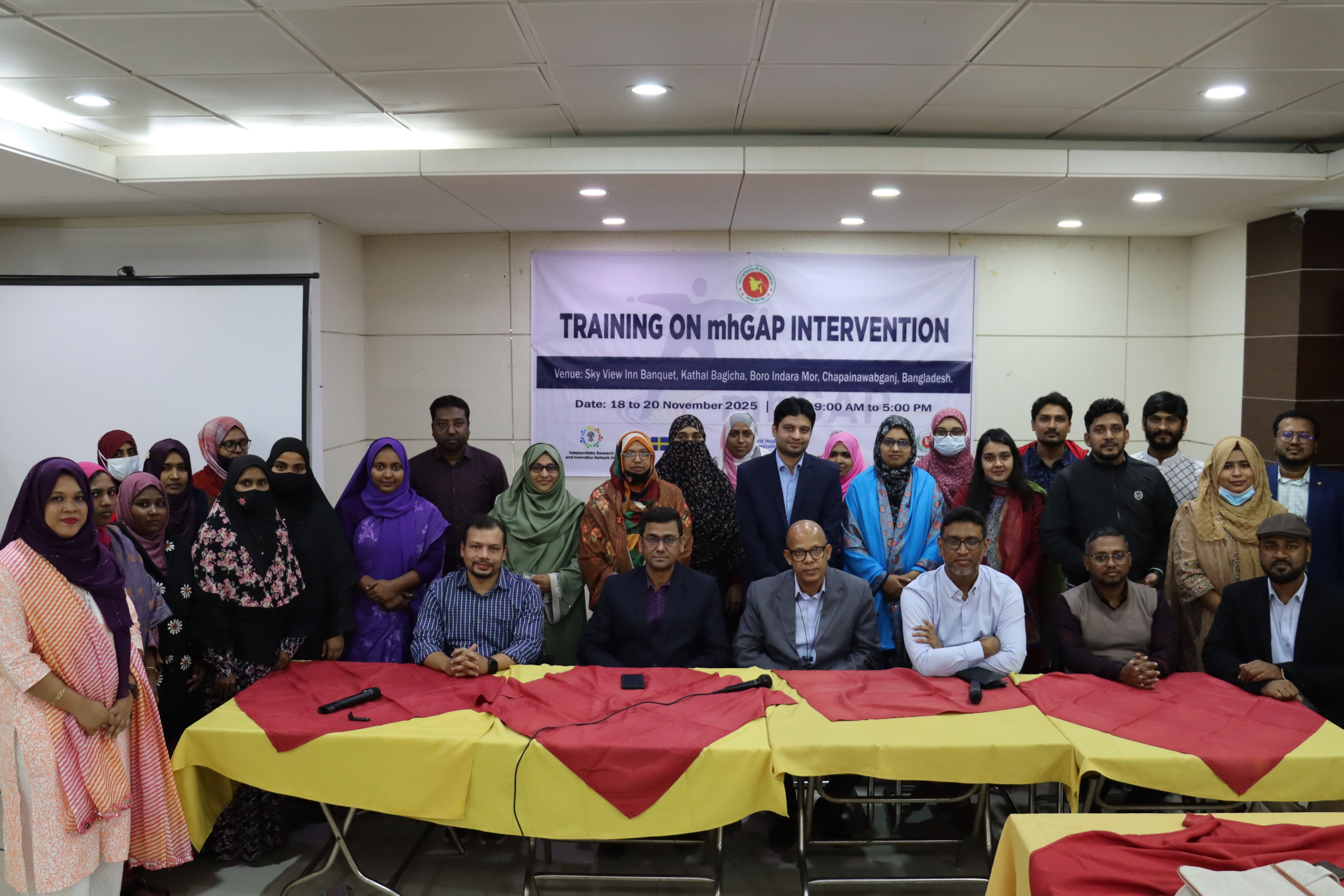
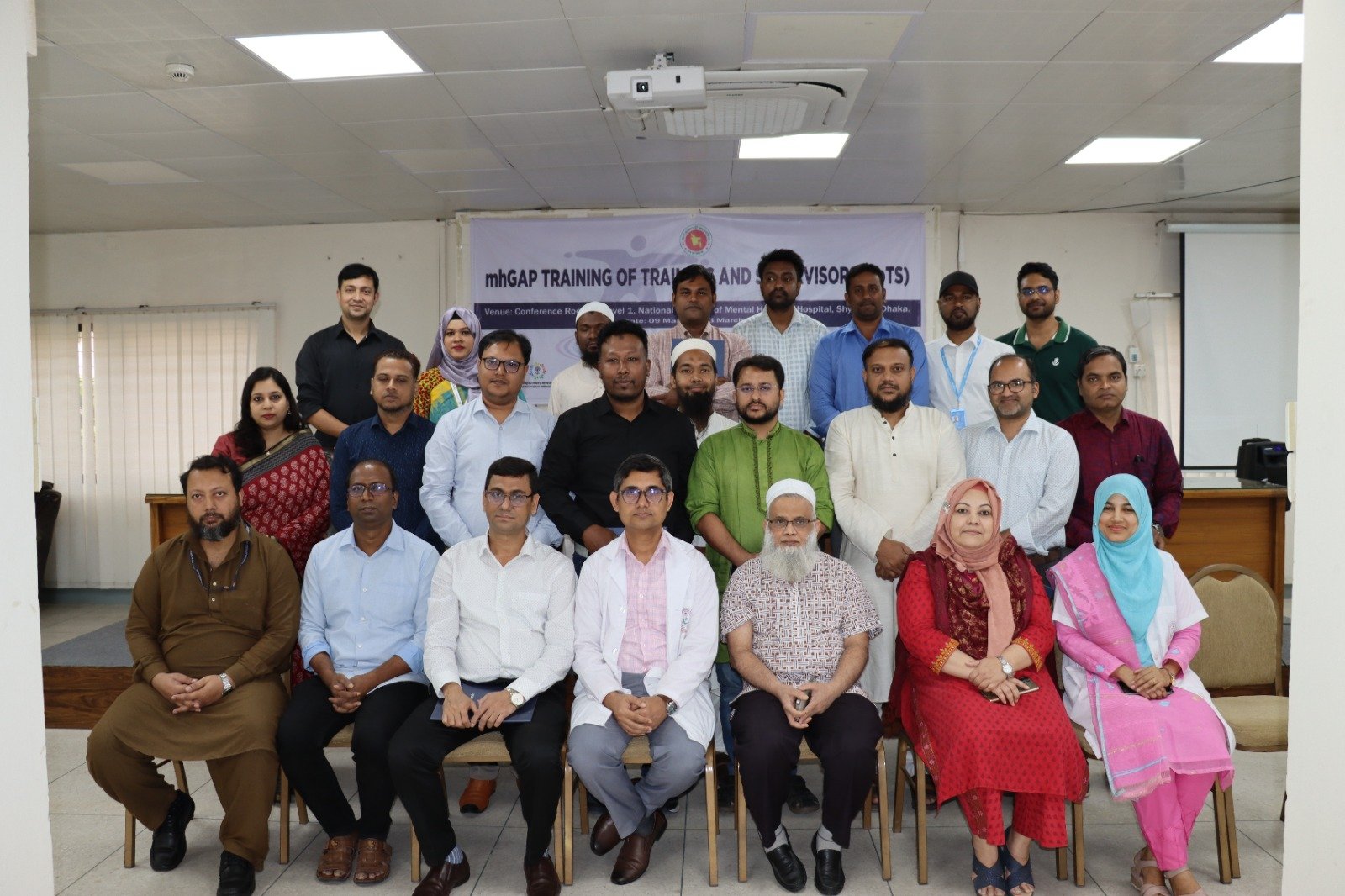
The project was implemented over an 18-month period using a phased capacity-building approach. Phase 1: Training of Trainers (ToT) A five-day Training of Trainers (ToT) program was initially conducted in Dhaka at the BRAC Center Inn, Mohakhali. The inauguration was attended by Professor Dr. Mahbubur Rahman of the National Institute of Mental Health and Dr. Mostafizur Rahman from the Directorate General of Health Services. The sessions were facilitated by experienced psychiatrists and clinical psychologists with extensive experience in mhGAP training. The ToT followed WHO guidelines and included interactive methodologies such as role plays, group activities, video demonstrations, and case-based discussions. Two additional ToT programs were later conducted at the National Institute of Mental Health and Hospital. In total, three ToT programs produced 64 trained mhGAP trainers. Of these, 41 participants were from the five target districts, and 23 were from NIMH, WHO, the Telepsychiatry Research and Innovation Network, and other partner organizations. Phase 2: District-Level mhGAP Training Following the ToT, district-level three-day mhGAP training sessions were conducted in Sylhet, Chapainawabganj, Sherpur, Netrokona, and Kurigram. A total of 15 training sessions (three per district) were organized under the guidance of the respective Civil Surgeons and with overall support from WHO. Each batch included up to 25 participants. Across the five districts, a total of 365 healthcare providers were trained in mhGAP interventions. Among them: 238 were doctors 127 were nurses 175 were male participants 190 were female participants The trainings incorporated role plays, group work, video demonstrations, and case-based scenarios to strengthen clinical and referral skills. Phase 3: Supportive Supervision Post-training supportive supervision was conducted to assess implementation, address challenges, and provide guidance on documentation and record-keeping of mental health services. A total of 41 supportive supervision visits were completed across the five districts.

Result

The initiative successfully developed a sustainable training model for strengthening district-level mental health services. Key achievements include: Development of 64 certified mhGAP trainers through three ToT programs. Implementation of 15 district-level mhGAP training sessions across five districts. Training of 365 healthcare providers (238 doctors and 127 nurses). Gender-balanced participation, with 175 male and 190 female trainees. Completion of 41 supportive supervision visits to reinforce implementation and address practical challenges. Healthcare providers demonstrated improved understanding of mhGAP intervention protocols, enhanced confidence in managing common mental health conditions, and strengthened referral practices within the healthcare system.

Discussion

This 18-month mhGAP training initiative demonstrates that structured capacity building, supported by national institutions and international partners such as WHO, can effectively strengthen mental health service delivery at the district level. The Training of Trainers model proved to be an efficient and sustainable strategy for scaling mental health capacity within the public health system. Interactive methodologies, including role play and case-based learning, contributed to improved practical competency among participants. Furthermore, supportive supervision played a critical role in bridging the gap between theoretical knowledge and real-world clinical application. By equipping 365 frontline healthcare providers across five districts with mhGAP competencies, the program contributes meaningfully to reducing the mental health treatment gap in Bangladesh. Continued supervision, integration into routine health systems, and expansion to additional districts could further enhance the long-term impact of this initiative.

Back to All Research