Completed Research

Conducting Training for Doctor and Nurse -Save The Children

The COVID-19 pandemic placed unprecedented pressure on frontline healthcare workers in Bangladesh. Doctors and nurses faced prolonged working hours, uncertainty, fear of infection, psychological distress, and significantly increased levels of anxiety and depression. Despite their essential role in managing the public health crisis, structured mental health support systems for healthcare professionals remained limited. Addressing their psychological well-being became crucial to sustaining healthcare service delivery and ensuring resilience within the health system. In response to this urgent need, the Directorate General of Health Services (DGHS), in collaboration with Save the Children, launched a capacity-building training program across 20 districts of Bangladesh to strengthen peer support mechanisms and promote mental well-being among healthcare workers.

Objective

The primary objective of this initiative was to enhance the capacity of doctors and nurses to manage stress, recognize psychological distress, and provide peer support within healthcare settings during the COVID-19 pandemic. The program aimed to develop a structured and practical approach to strengthening psychological resilience, increasing awareness of mental health challenges among healthcare professionals, and establishing supportive workplace environments. By equipping healthcare workers with relevant knowledge and skills, the initiative sought to ensure sustainable mental health support practices within the public health system.

Method

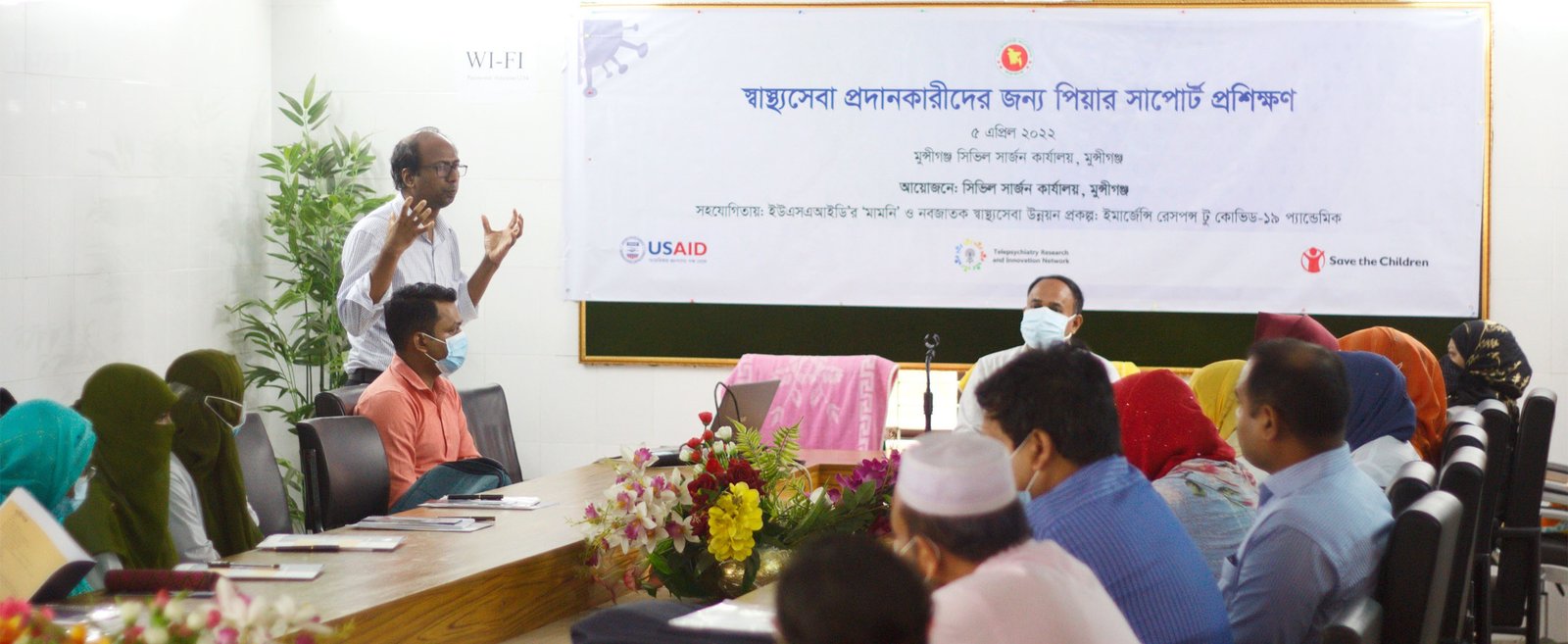
The training program was implemented across 20 districts of Bangladesh using a structured and standardized approach. The Telepsychiatry Research and Innovation Network (TRIN) was responsible for developing the working manual, conducting the training sessions, and overseeing the completion of the program. The training content focused on peer support strategies, stress management techniques, effective communication, and identification of mental health distress among colleagues. Interactive methodologies such as group discussions, scenario-based exercises, and practical demonstrations were incorporated to enhance participant engagement and learning outcomes. On April 5, 2022, the Civil Surgeon Office in Munshiganj organized a conference titled “Peer Support Training for Healthcare Workers,” where Dr. Tanjir Rashid Soron, Managing Director of TRIN, along with Psychologist Tanzina Chowdhury and Mahadi Hasan, facilitated the training and contributed to the discussions.

Result

The initiative successfully improved awareness and understanding of mental health challenges among doctors and nurses working on the frontline during the pandemic. Participants gained practical knowledge on recognizing stress, anxiety, and psychological distress among colleagues and learned structured peer support approaches to address these challenges. The training strengthened interpersonal communication within healthcare teams and promoted a supportive and empathetic work environment. The development and dissemination of a standardized working manual further ensured consistency and sustainability of the peer support approach across the participating districts.

Discussion

The COVID-19 pandemic underscored the vulnerability of healthcare workers to mental health distress and highlighted the importance of institutional mental health support mechanisms. This capacity-building initiative demonstrated that structured peer support training can effectively enhance resilience and psychological well-being among frontline healthcare professionals. By integrating peer support practices within healthcare settings, the program addressed a critical gap in mental health services for professionals during a public health emergency. Sustained implementation of such initiatives and institutional commitment to healthcare worker well-being will be essential in strengthening preparedness for future crises and ensuring a resilient health system.

Back to All Research