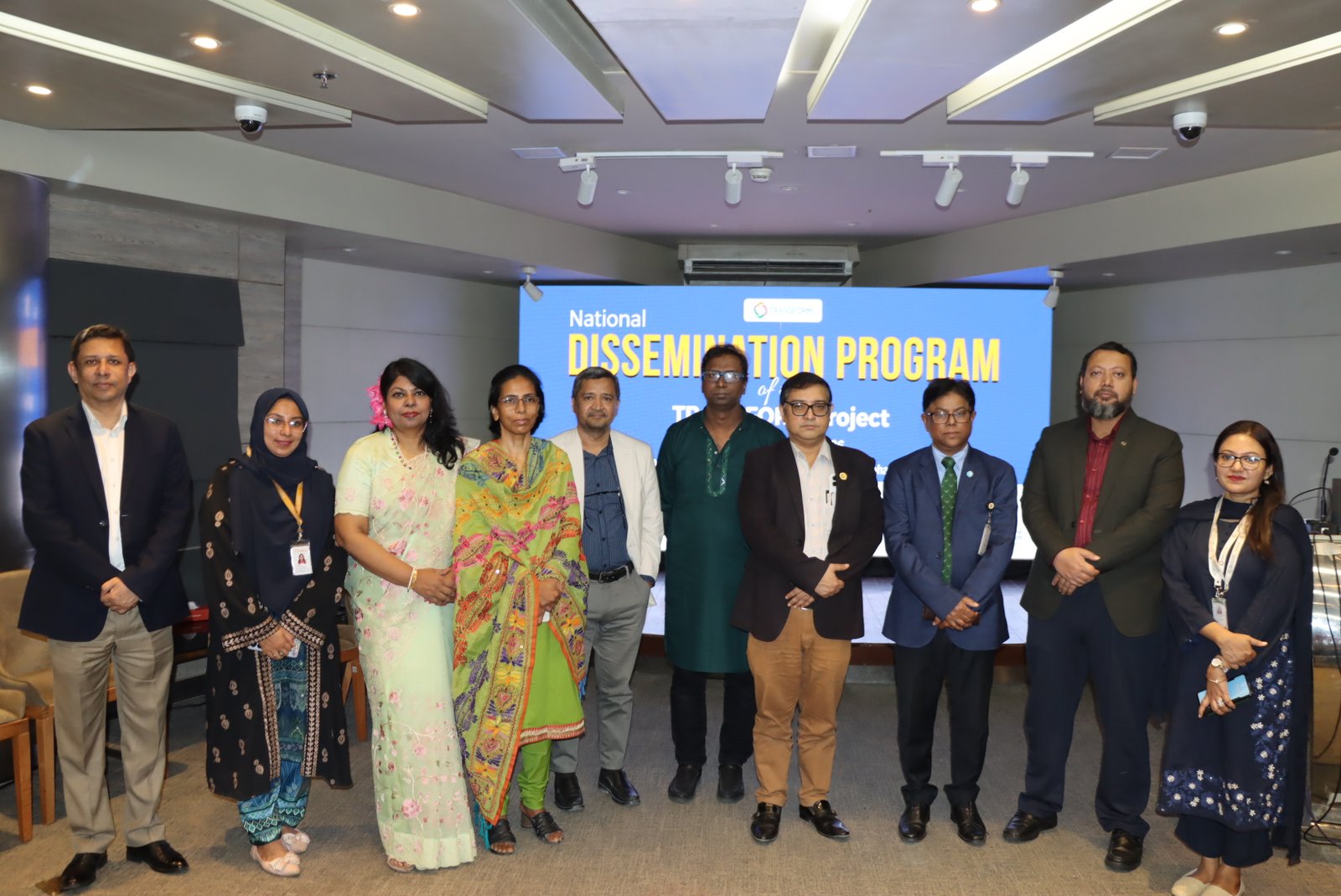
Transforming Access to Care for Serious Mental Disorders in Slums - The TRANSFORM-Bangladesh, funded by the NIHR UK.
Bangladesh faces a severe mental health crisis, with more than 30 million people suffering from mental disorders, over 90% of whom do not seek professional help. This treatment gap is further compound...
Explore Research
Evaluating the effect of different mHealth approaches for smoking cessation among the university students of Dhaka: A mixed method study.
Smoking is a practice a substance is burned to create smoke which is breathed in to be tasted. Tobacco smoking is a prac...
Read More
COVID-19 and Preventive Attitudes: A Cross-Analysis of Risk and Protective Factors in Health Systems in Haiti, Democratic Republic of Congo, Rwanda, Togo, Bangladesh, and Pakistan
Based on a global health perspective, this project aims to (1) analyze the status of COVID-19 pandemic surveillance and...
Read More
Depression, Anxiety and Stress of Healthcare Professionals during COVID-19 Pandemic
The Covid-19 pandemic is causing significant mental health hazards among health care providers. The frontline health-car...
Read More
You and The Owl
In certain traditions and cultures, it is a tradition to believe that certain animals are represents certain symbols. It...
Read More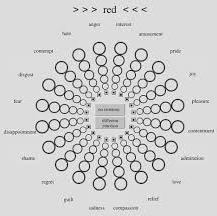
Colour and emotion across cultures and individuals
A collaborative study where we conducted the study in Bangladesh context and our team lead Dr. Soron was the site PI. T...
Read More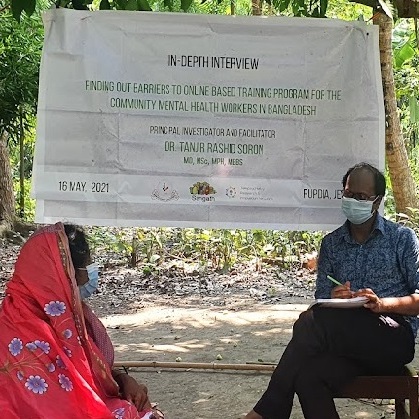
Finding out Barriers to Online Based Training Program for the Community Mental Health Worker in Bangladesh
Lack of mental health service has been documented as a major contributor to the global health burden and like many other...
Read More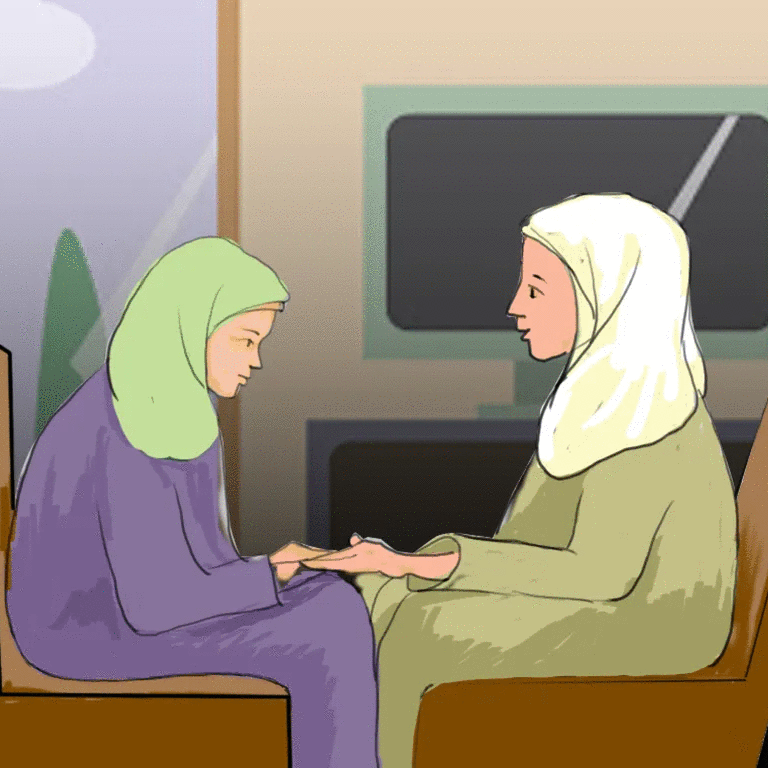
Contextualize mhGAP training modules and materials in Maldives Context
Read More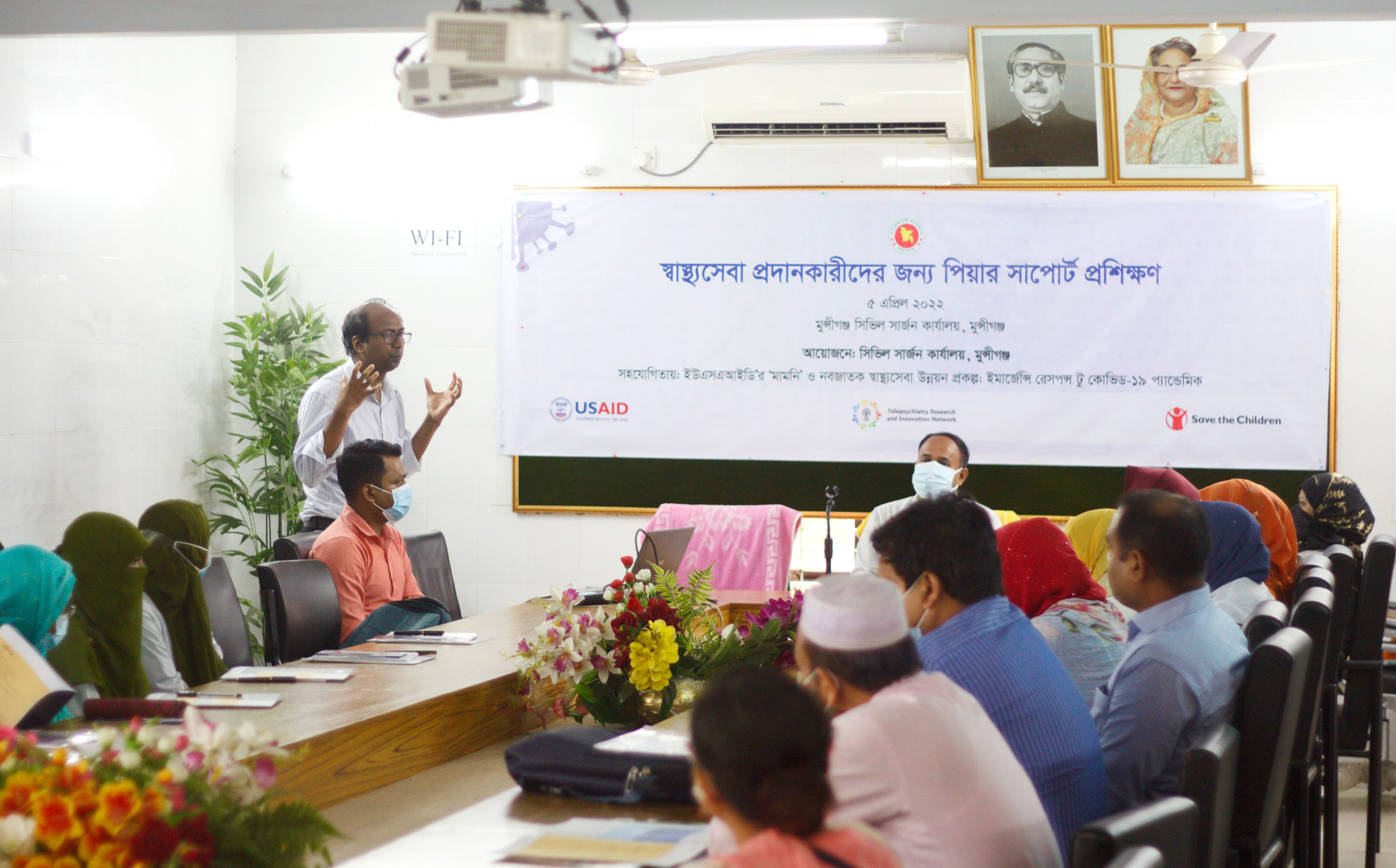
Conducting Training for Doctor and Nurse -Save The Children
The COVID-19 pandemic placed unprecedented pressure on frontline healthcare workers in Bangladesh. Doctors and nurses fa...
Read More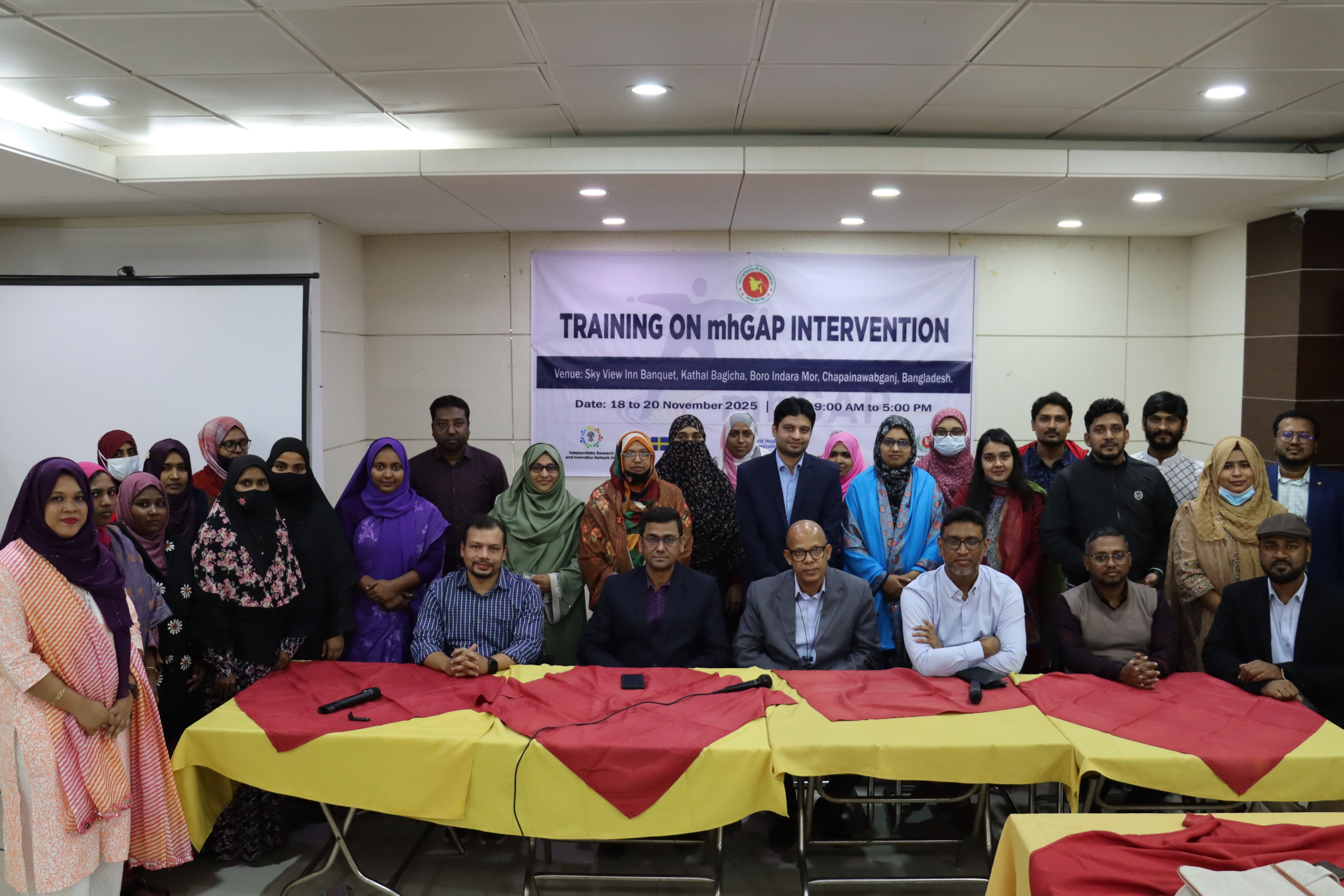
mhGAP Training in Five Selected Districts with the Support of the World Health Organization (WHO)
Mental health conditions are increasingly recognized as a significant public health concern globally, and Bangladesh is...
Read More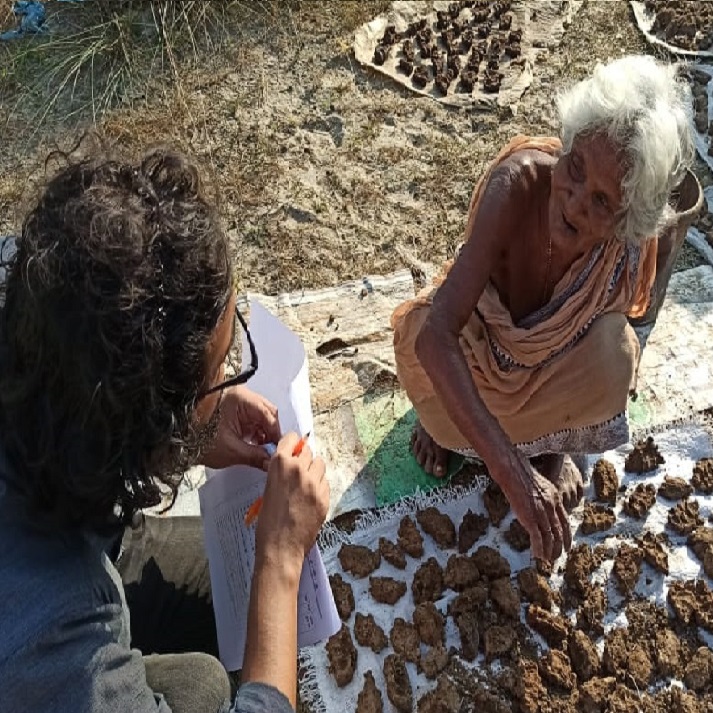
Developing Assessment tools for mental health and wellbeing in Bangladesh Context
Our team lead has been working for year in guiding and developing various psychometric scales for different mental healt...
Read More
Domestic Violence and Mental Health During COVID-19 in Bangladesh
The Lock down, work from home and other unprecedent events have created multilayer and multidimensional impact on our pe...
Read More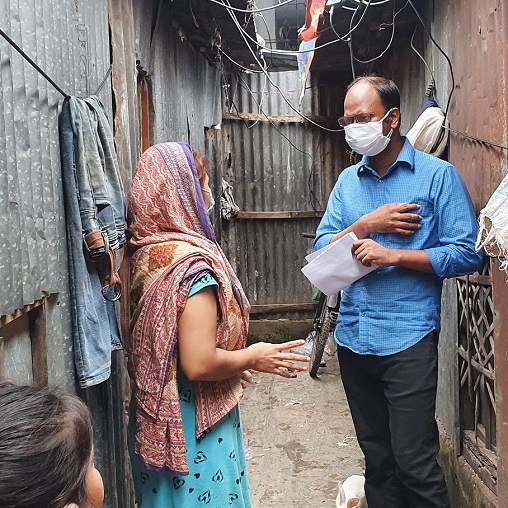
Exploring the role of innovative technology-based solutions in increasing access to mental health care for underprivileged community
One of major key research area to increase access to mental health care for all including those are socioeconomically an...
Read More
Facebook use, the fake news and metal health- the observation from six countries during the COVID-19
The COVID-19 pandemic imposed multilayered and multidimensional stress and crisis in our life. The increasing digital de...
Read More
Development of a Digitalized Bangla Autism Assessment System in Bangladesh
The prevalence of Autism Spectrum Disorder is said to be increasing exponentially over the years possibly due to various...
Read More
Mobile-Based Care for Children with Autism Spectrum Disorder Using Remote Experience Sampling Method (mCARE)
The revolution in the use of the mobile phone (~80%) by the majority of people in Bangladesh in recent years has created...
Read More