Skip to content
Work with us

Training

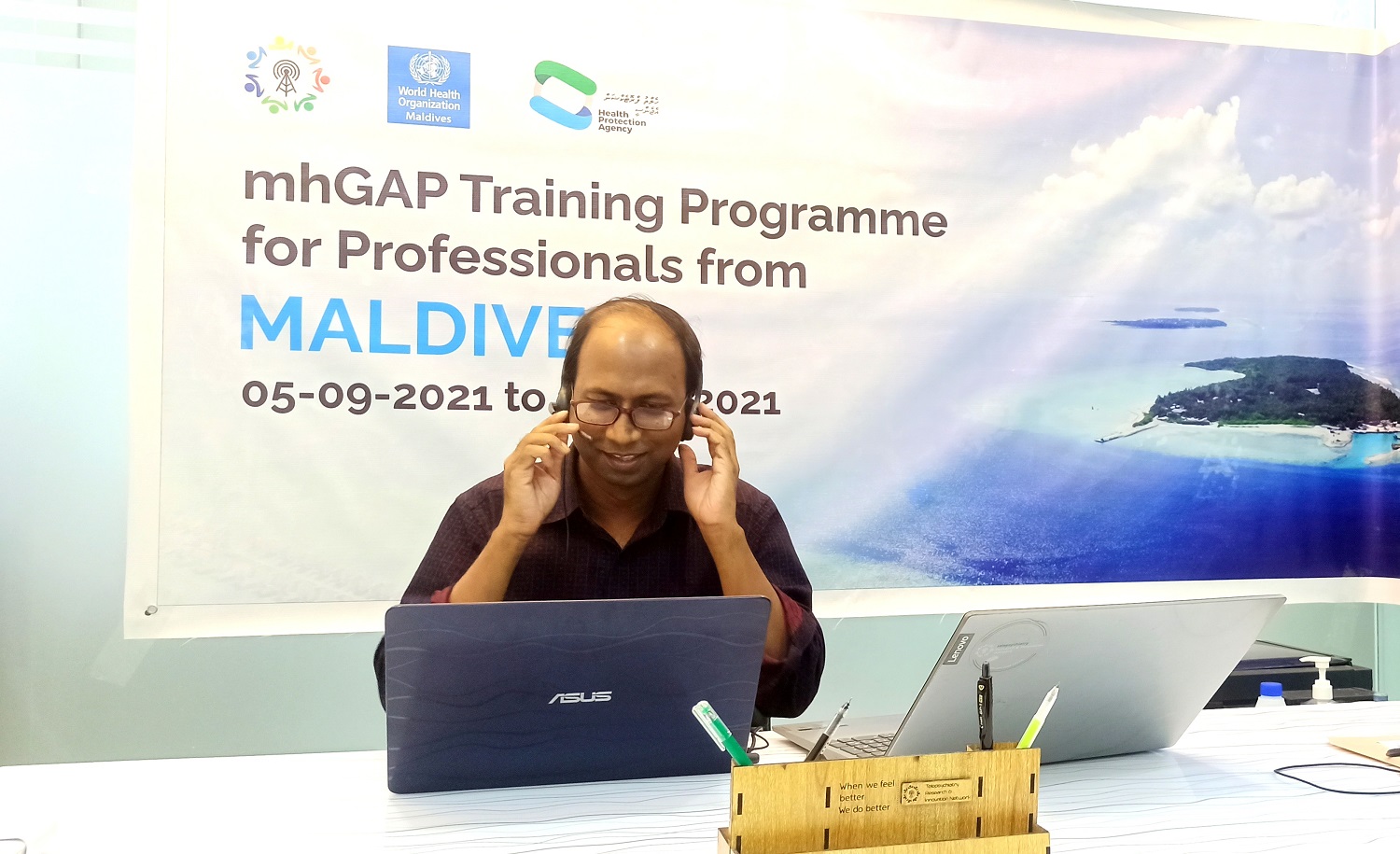
mhGAP Training Programme for the Maldives

Teaching health-care providers to assess and manage priority mental, neurological and substance use conditions, using WHO's evidence-based mhGAP Intervention Guide in non-specialised health settings.

WHO mhGAP-IG 12 core competencies 5 September 2021
Overview

01 · What it is

Training of Health-care Providers

The mhGAP Training of Health-care Providers (ToHP) manual has been designed to teach health-care providers how to assess and manage priority mental, neurological and substance use (MNS) conditions, using the evidence-based mhGAP Intervention Guide in non-specialised health settings.

For the best results the training should be implemented as part of a multifaceted approach to scaling up mental health care in a country. Health planners, managers and policy-makers should be involved, so that primary health-care providers actually have the resources to deliver mhGAP interventions. Regular supervision and refresher courses matter as much as the initial week.

02 · Objectives

The twelve core competencies

The ToHP training aims to ensure that health-care providers attain core competencies in delivering care for people with MNS conditions. Twelve have been developed, covering everything needed to assess and manage each priority condition. They match the learning objectives of each module, and cover attitude, knowledge and skill.

  1. Promotes respect and dignity for people with MNS conditions (attitude).
  2. Knows common presentations of priority MNS conditions (knowledge).
  3. Knows assessment principles of MNS conditions (knowledge).
  4. Knows management principles of MNS conditions (knowledge).
  5. Uses effective communication skills in all interactions with people with MNS conditions (skill).
  6. Performs assessment for priority MNS conditions (skill).
  7. Assesses and manages physical conditions of people with MNS conditions (skill).
  8. Assesses and manages emergency presentations of priority MNS conditions (skill).
  9. Provides psychosocial interventions to people with a priority MNS condition and their carer (skill).
  10. Delivers pharmacological interventions as needed and appropriate in priority MNS conditions, considering special populations (skill).
  11. Plans and performs follow-up for priority MNS conditions (skill).
  12. Refers to specialists and links with outside agencies for priority MNS conditions, as appropriate and available (skill).
Photographs

From the training

An mhGAP training session in progress.
Participants working through the Intervention Guide.
Group work during the training of health-care providers.
← All training programmes